Etusivu » Referenssit » Electric Boiler for Rajamäki – Finess EPC Delivery for the Efficient Use of Wind Power in District Heating
Electric Boiler for Rajamäki – Finess EPC Delivery for the Efficient Use of Wind Power in District Heating
Article originally published in 10.3.2026
The rapid shift toward wind power in Finland’s electricity generation has significantly transformed the electricity market. Carbon-free electricity is sometimes extremely affordable, and the price of electricity on the exchange can drop as low as 1–2 cents per kilowatt-hour. To respond to this development, Nurmijärvi Electricity is investing in electric boilers and developing its district heating production toward a non-combustion and completely carbon-free solution.
The containerized solution was lifted into position in the summer of 2025.
Finess delivered a 3 MW electric boiler system to Nurmijärven Sähkö as a turnkey project at the Rajamäki heating plant. The electric boiler was commissioned at the end of 2025 and now operates as part of the regional district heating network and as a reserve solution for the electricity market. In addition, a procurement decision has been made for a similar electric boiler at the Kirkonkylä heating plant, with commissioning scheduled for 2026.
A strategic step toward carbon-free heating
Nurmijärven Sähkö aims to gradually transition to non-combustion district heating production. Currently, approximately 97 percent of the company’s district heating is generated using wood fuels, and its specific emissions are significantly lower than the industry average.
“With electric boilers, we will be able to launch a completely carbon-free district heating product in the future,” says Pekka Roivainen, Head of Heating at Nurmijärven Sähkö.
Electric boilers enable the efficient utilization of renewable electricity, particularly when wind and solar power production is high and the market price of electricity is low. In 2024, approximately half of the 144 gigawatt-hours of electricity sold by Nurmijärven Sähkö came from wind and solar power via Suomen Voima.
Finess’s solution brings flexibility to the electricity market and reserve capacity
Electricity production and consumption must be constantly balanced. An electric boiler is ideally suited for this purpose, as its operation can be quickly adjusted to market conditions.
The control of an electric boiler is based on total costs: when using electricity is cheaper than burning solid fuel, the electric boiler automatically turns on, and vice versa. However, the price of energy alone is not the deciding factor; the requirements of the reserve market also influence the operating logic.
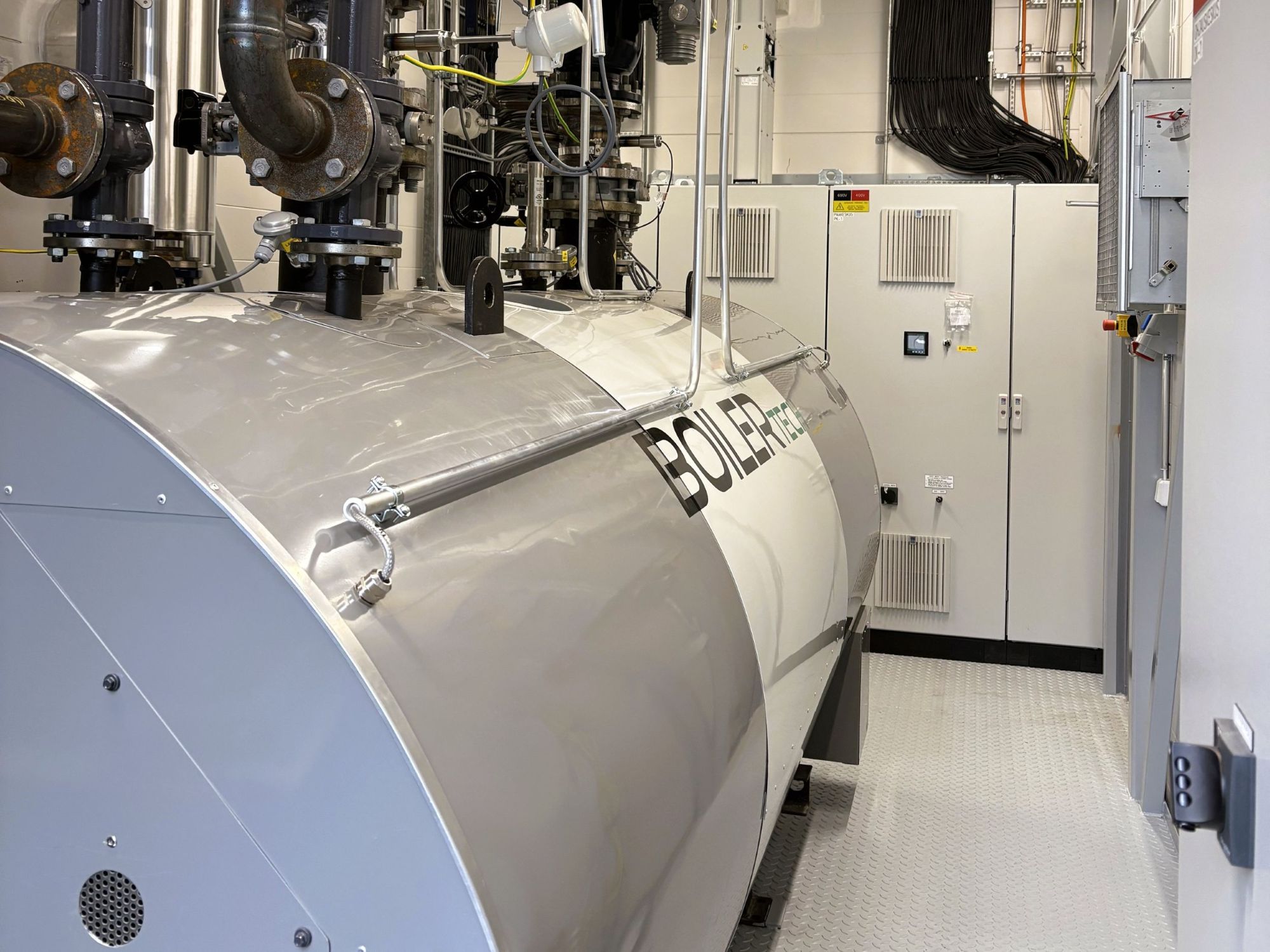
The 3 MW electric boiler installed inside the containerized unit supports the regional district heating network while also participating in electricity reserve markets.
A reliable container solution delivered as a turnkey solution
The Rajamäki electric boiler project was delivered as a compact containerized solution engineered and supplied by Finess. Installed directly alongside the existing heating plant, the unit required only a small footprint. From the outside, the installation resembles a standard shipping container and covers approximately 40 m².
Finess provided a complete turnkey package comprising a customized equipment container, a 3 MW electric hot water boiler, electrical and control systems, piping and instrumentation, flow metering, as well as provisions for a 3,150 kVA transformer and 20 kV switchgear.
Externally, the solution resembles a standard shipping container. Every Finess solution is individually engineered and tailored to meet the specific requirements of each project.
The boiler complements the regional district heating network and participates in the reserve market. The electric boiler project in Rajamäki is a concrete example of how renewable electricity can be utilized more efficiently in district heating while making determined progress toward carbon-free energy production.