Etusivu » Referenssit » Wastewater Heat Recovery Enhances Energy Efficiency at ViskoTeepak’s Factory
Wastewater Heat Recovery Enhances Energy Efficiency at ViskoTeepak’s Factory
Every year, a significant amount of warm wastewater is generated at ViskoTeepak Oy Ab’s Hanko factory. The thermal energy contained in this wastewater can be recovered and utilised to meet the factory’s heating needs. Wastewater heat recovery offers an opportunity to reduce primary energy consumption and improve the factory’s overall energy efficiency.
Project Background
The objective of the project was to assess the technical feasibility and financial viability of wastewater heat recovery and to design a functional system for utilising the recovered heat in the factory’s process heating and building heating systems.
In ViskoTeepak’s case, the aim of the heat pump system was to recover the thermal energy contained in the wastewater while reducing the factory’s reliance on primary heating energy.
ViskoTeepak project demonstrates that even the thermal energy contained in industrial wastewater can be harnessed as a valuable energy resource when the overall system is properly designed
The Feasibility Study Identified Significant Heat Recovery Potential
Based on the assessment carried out by Finess Energy, the ViskoTeepak factory offered favourable conditions for wastewater heat recovery. In particular, the consistent flow rate and relatively high temperature of the wastewater provided an excellent basis for the long-term and efficient operation of a heat pump system.
The main challenges were the factory’s structural layout and the relatively long distances between the wastewater source and the points where the recovered heat would be utilised. These challenges were addressed during the design phase by optimising the overall system configuration.
The appropriate temperature level of the heat distribution network was also a key consideration in the design process, ensuring that the heat pump could operate as efficiently as possible.
Based on the feasibility study, the system was designed for a heating capacity of approximately 700 kW and a cooling capacity of approximately 500 kW.
From Design to Implementation
During the project’s design phase, the system was optimised from several different perspectives. The objective was to create a technically reliable and energy-efficient solution suitable for the factory’s continuous operation.
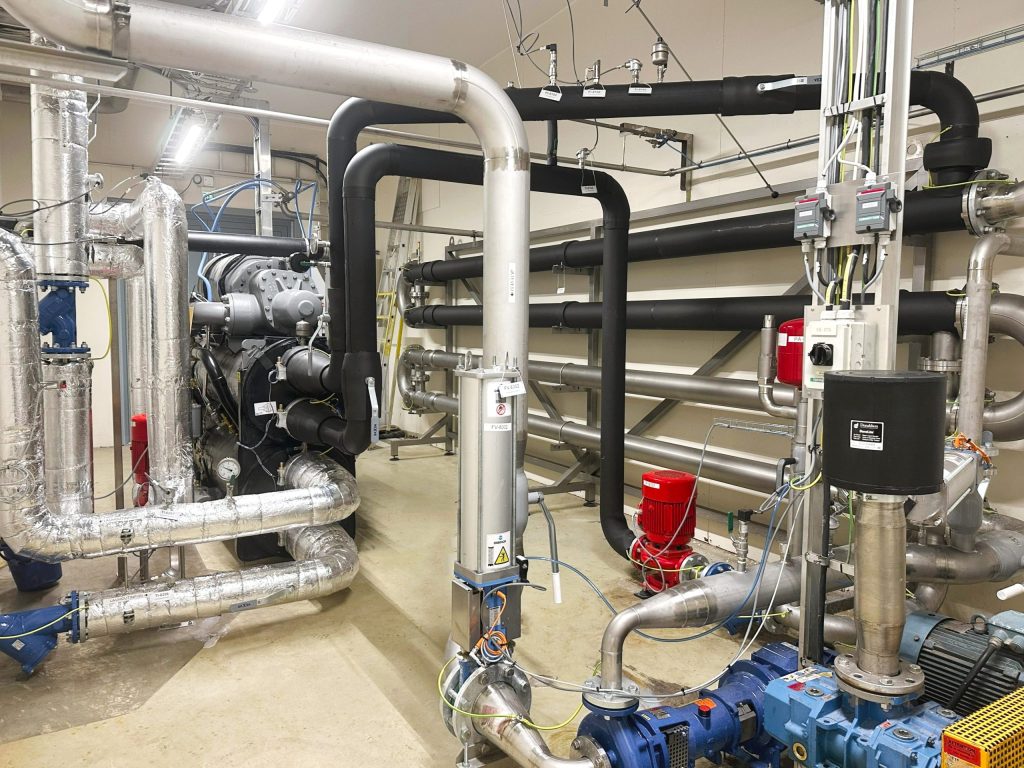
The delivery included the complete system required for wastewater heat recovery and heat transfer. The system recovers thermal energy from the wastewater using a heat pump and transfers the generated heat for use in the factory’s process heating and building heating systems.
The overall delivery included, among other things:
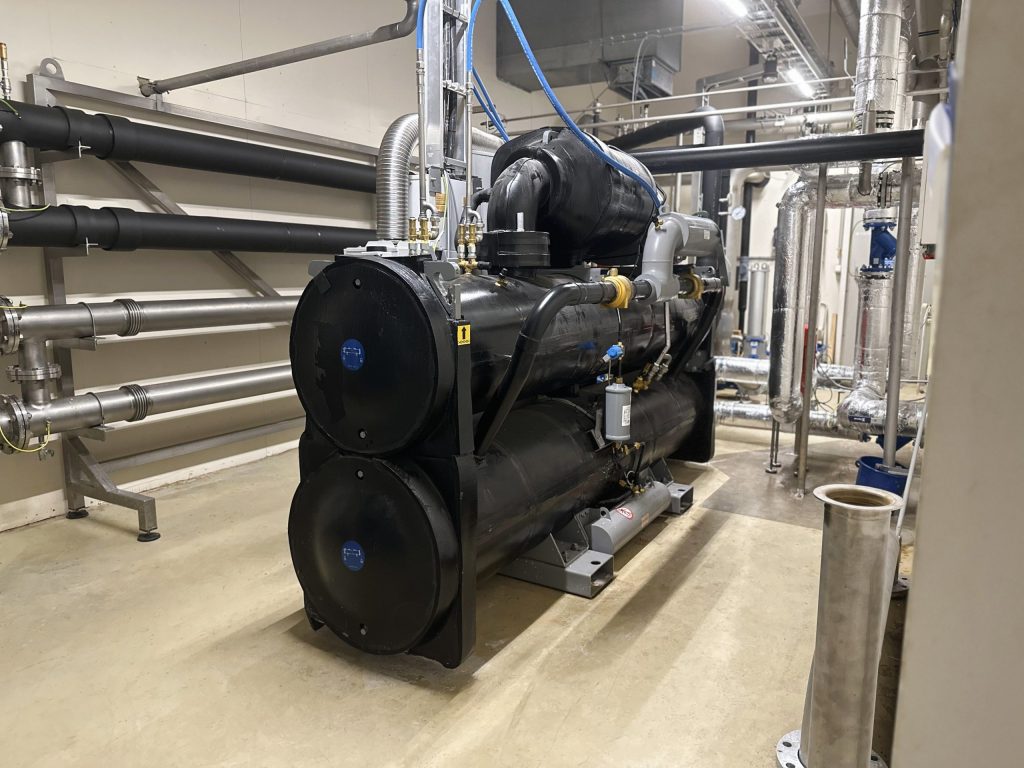
A heat pump system with a capacity of approximately 700 kW
Wastewater heat recovery
A wastewater heat exchanger and its installation in the equalisation tank
Modifications to the wastewater circulation system and the required piping
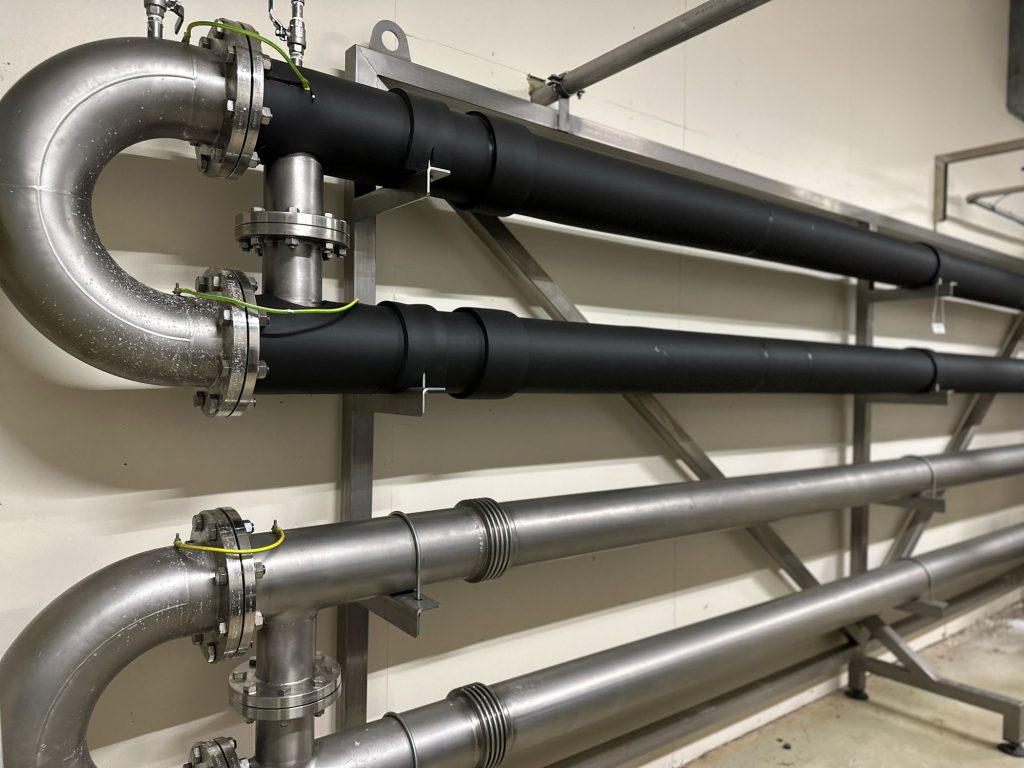
Construction of a heat distribution network running across the factory, including the necessary equipment
Heat exchangers and other components required for heat delivery
Integrated system automation and control logic
An automatic cleaning system for the heat exchanger
A maintenance agreement
The automatic cleaning system for the wastewater heat exchanger is a particularly important part of the solution. In industrial wastewater applications, fouling of heat exchangers can affect heat transfer efficiency. Automatic cleaning therefore helps ensure reliable system operation and reduces the need for manual maintenance.
The heat exchangers in the wastewater heat recovery system transfer the recovered thermal energy into the factory’s heating network
The System Was Designed as an Integrated Part of the Factory’s Energy Supply
Wastewater heat recovery is not a standalone energy production solution at the factory. Instead, it has been integrated into the factory’s existing heating system.
The heat generated by the system can be utilised for both process heating and building heating. This allows the energy contained in the wastewater to be put to use as extensively as possible.
The project also included the construction of a heat transfer pipeline running across the factory. In addition, the delivery covered the heat exchangers required for heat distribution and all other components necessary for system operation.
Taking overall responsibility for the delivery made it possible to design the system as one integrated solution, covering the entire process from the wastewater heat source to the final points of heat consumption.
The heat generated by the system can be utilised for both process heating and building heating. The heat pump included in the system has a capacity of 700 kW.
Reliable Operation Even in Exceptional Circumstances
In practice, the system has demonstrated its suitability for the factory’s energy supply. For example, it has reliably served as the factory’s primary heating system during a period when the customer’s existing main heating system was undergoing maintenance.
This is a good demonstration of the system’s operational reliability and its ability to provide a significant contribution to the factory’s heat supply under real operating conditions.
Successful Collaboration Delivered an Integrated Solution
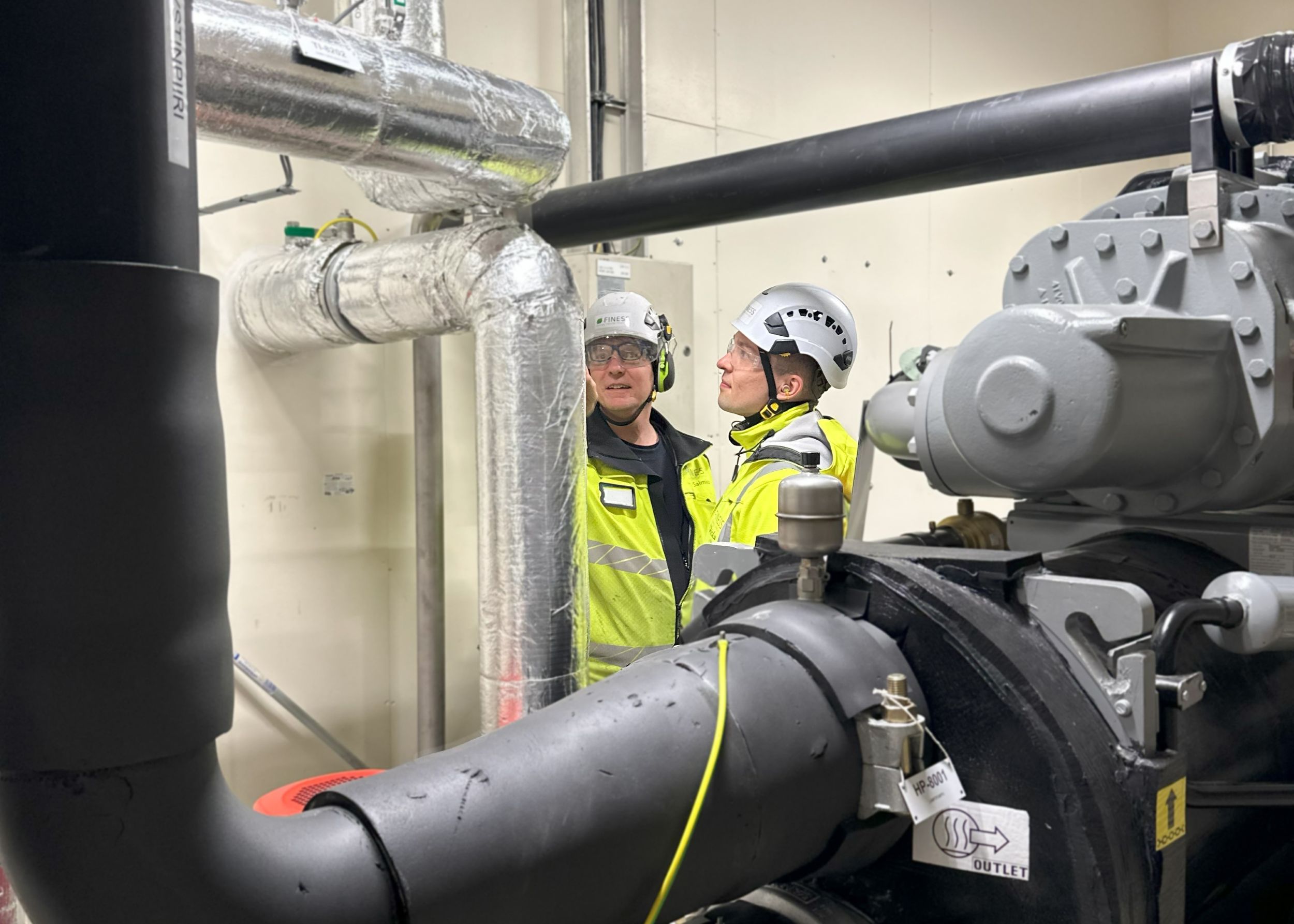
Close cooperation with ViskoTeepak’s personnel played an important role in the success of the project. Knowledge of the factory’s processes and existing systems was essential in designing and optimising the solution.
Visko Teepak’s personnel provided the necessary information throughout the different stages of the design process, facilitating the development of the overall solution and its practical implementation.
The ViskoTeepak project demonstrates how thermal energy generated by industrial processes can be recovered and reused within a factory’s own energy system. It is an example of an industrial energy solution in which technical design, system optimisation and an in-depth understanding of the customer’s processes come together to create an effective and integrated whole.
Careful planning and close cooperation made it possible to optimise the system to meet the specific requirements of the site.