Etusivu » Referenssit » The wastewater treatment plant’s building is heated using waste heat from the wastewater and aeration process
The wastewater treatment plant’s building is heated using waste heat from the wastewater and aeration process
Article originally published in 2.2.2021
In early 2019, a heat recovery system for wastewater and aeration air was commissioned at the Peltoniemi wastewater treatment plant in Lohja. For this purpose, Finess supplied the plant with a heat recovery system for wastewater and aeration air. These systems recover approximately 215 MWh of thermal energy annually, which is used to heat the treatment plant building. Using renewable energy instead of direct electric heating reduces costs and CO2 emissions.
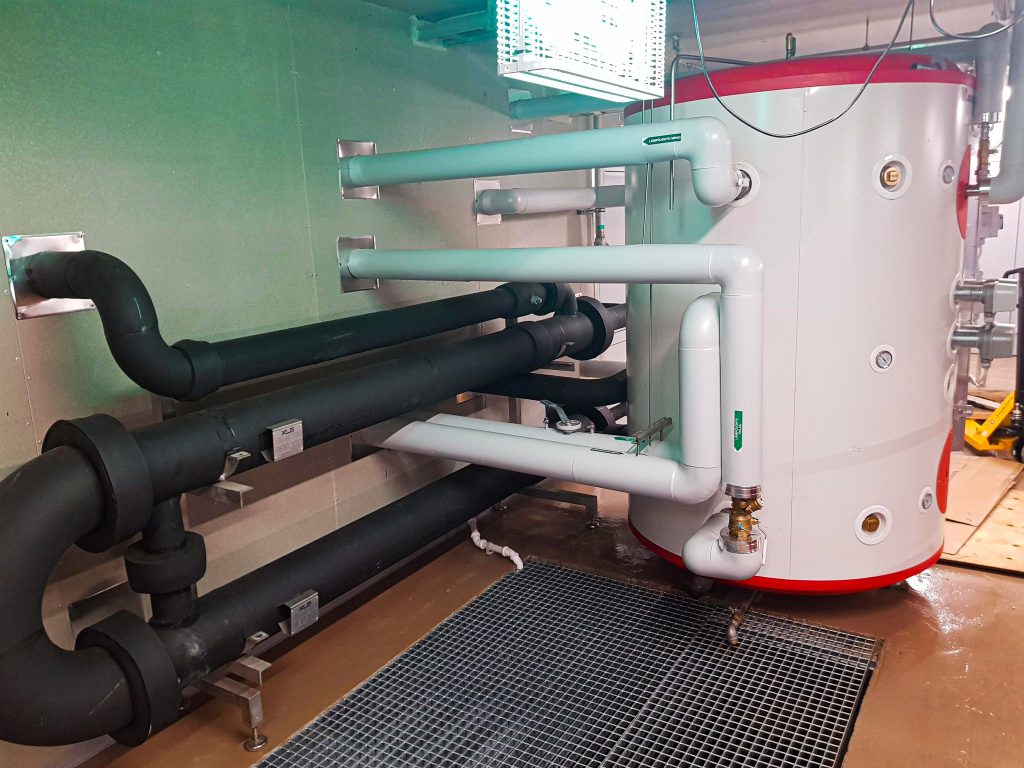
The Lohja Peltoniemi wastewater treatment plant uses aeration compressors that supply compressed air to the aeration tank. Previously, a large portion of the 40–50 °C heat generated as a byproduct of the compressor’s operation was transferred to the aeration tank. Now, the heat is recovered and transferred to heat the facility, allowing the treatment plant to be heated solely with the waste heat from the aeration air in the spring and fall.
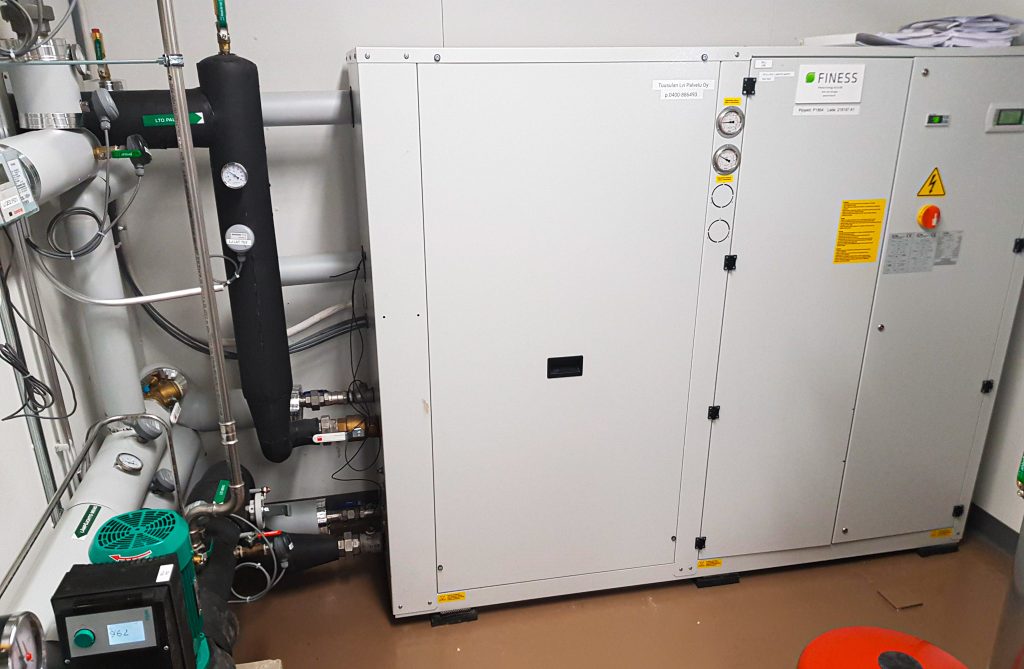
Treated wastewater continuously leaves the Lohja treatment plant, and this wastewater also contains usable thermal energy. The temperature of the treated wastewater is low enough that a heat pump is required to utilize its heat. Finess also supplied the Peltoniemi treatment plant with a wastewater heat recovery system, which included a heat pump and a Monotube heat exchanger. With this system, the thermal energy contained in the treated wastewater was harnessed for use in heating the building.
Finess supplied the wastewater and ventilation air for the heat recovery system
Finess supplied the Peltoniemi wastewater treatment plant in Lohja with XTUBE tube heat exchangers and a heat pump with a combined thermal output of 125 kW. The heat exchangers and heat pump recover approximately 215 MWh of heat annually from treated wastewater for use in heating the facility.
Technical specifications of the equipment:
Heat source: treated wastewater and waste heat from ventilation air
Wastewater temperature: 4–10 °C (4 °C during spring snowmelt, normally approximately 10 °C)
Ventilation air temperature: 40–50 °C
Heat pump heat output: maximum 60 °C
The benefits include lower costs and emissions, as well as a higher share of renewable energy
The treatment plant building at the Peltoniemi wastewater treatment plant in Lohja previously used direct electric heating. The new heating system, based on heat recovery, reduces electricity consumption and heating costs. Thanks to the use of renewable energy, the wastewater treatment plant’s carbon dioxide emissions have also decreased by approximately 26,000 kilograms per year.
The municipality of Lohja is a member of the Hinku network, whose member municipalities and regions share the common goal of achieving an 80% reduction in emissions by 2030 compared to 2007 levels. The wastewater treatment plant’s energy efficiency project aligned with the network’s goals to increase carbon neutrality. Read more about the Hinku network here