Etusivu » Referenssit » A comprehensive heat recovery system improves energy efficiency at a pet food factory
Article originally published in 2.2.2021
Completed in August 2020, Premium Pet Food Suomi Oy’s new factory in Lieto is a model of energy efficiency. The pet food manufacturer is guided by a commitment to sustainability, which was reflected in the project through a particular focus on quality and energy efficiency. Finess designed a heat recovery system for the plant and supplied equipment for the processes and the building’s needs.
Founded in 2013, Premium Pet Food Suomi Oy is a developer and contract manufacturer of pet food and treats, with production facilities located in Lieto, near Turku. The company’s operations are guided by responsibility, and the bar is set high: the raw materials for pet food are entirely domestic, environmental considerations are a priority in energy use during production, and quality is a key factor.
Premium Pet Food Suomi uses only the best possible raw material in its production: domestic meat. CEO Mikko Isomäki considers Finnish raw materials to be superior and sees no point in seeking substitutes from abroad: it would not result in cost savings and, above all, would not meet the required quality standards.
“We make Finnish products from Finnish meat,” says Isomäki.
The new production facility built by Premium Pet Food in the Tuulissuo industrial area in Lieto will replace the old facility. From the outset, the design of the new facility was able to take energy efficiency into account for both the production processes and the building itself. Combining process and building technology is often challenging in practice, even in new construction projects, if energy efficiency at the facility-wide level is not prioritized.
– The project was technically very interesting. Premium Pet Food had ambitious goals for improving energy efficiency, and energy efficiency could be considered in the design beyond the traditional boundaries between processes and the building. Separate equipment deliveries and contracts were also successfully coordinated, as decision-making was swift and focused on achieving a good overall result, says Juha-Pekka Paavola, CEO of Finess Energy.
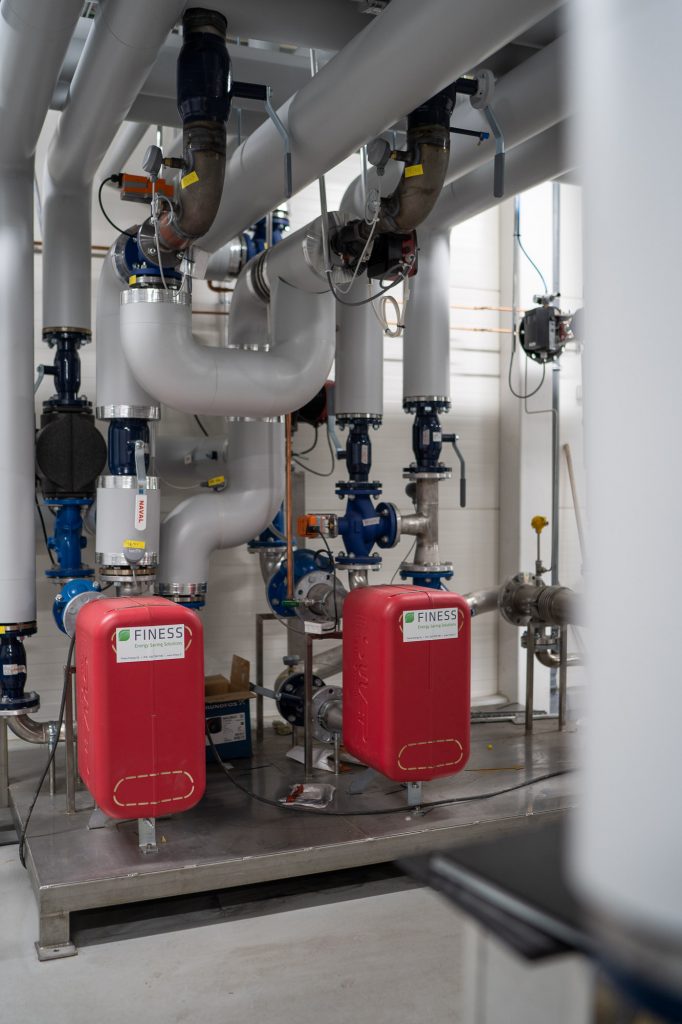
Heat recovery was implemented extensively, starting with energy use in production: heat is recovered from the exhaust steam of production condensates and fed into the plant’s heat recovery network, and heat from the network is transferred to process heating as well as to heating the building and domestic hot water.
The system also includes a heat pump that primarily recovers waste heat from cooling processes and transfers it to heat the building and domestic hot water. The same heat pump also handles the cooling of the building’s ventilation system. In the summer, when the need for cooling is greatest and the building does not require heating, the heat pump can provide heat to process equipment at a very low cost. Additionally, heat is recovered from the plant’s compressed air compressors and fed into the same heat recovery network.
– Process equipment is also connected to the same heat recovery network, and depending on the situation, it either utilizes the thermal energy available there or supplies heat to it. For example, the new drying oven supplied by Finess has such a connection in addition to the oven’s own heat recovery system, explains Paavola.
A component that is not part of Finess’s overall system but is an essential part of the energy ecosystem is the solar power plant installed on the roof of the new plant. The electricity it generates is renewable and reduces the need for purchased energy.
The steam required by the plant is also sourced sustainably, as Liedon Lämpö is building a bioenergy plant on the neighbouring lot.